
How to get to Schönbrunn Palace
Getting to Schönbrunn Palace is actually simpler than you might think. We’re going to walk through all your options, from the fastest metro routes to the smartest parking strategies.
Support when you need it
Customer service to help you with all your needs from 8:00 a.m. to 7:00 p.m.
Fast and online booking
Choose the best option for your needs and preferences and avoid the lines.
Top attraction in Vienna
Discover Vienna’s most famous palace and step into centuries of imperial history.
What you need to know?
Where is the entrance to Schönbrunn Palace located?
Schönbrunn is located in Vienna’s 13th district, Hietzing, about 7 kilometers southwest of the city center. But this isn’t just a building with one entrance you walk through.
The palace complex is huge, surrounded by historic walls with multiple gates that serve different purposes.
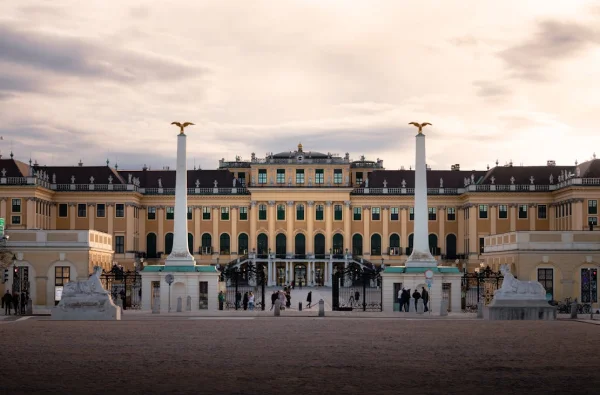
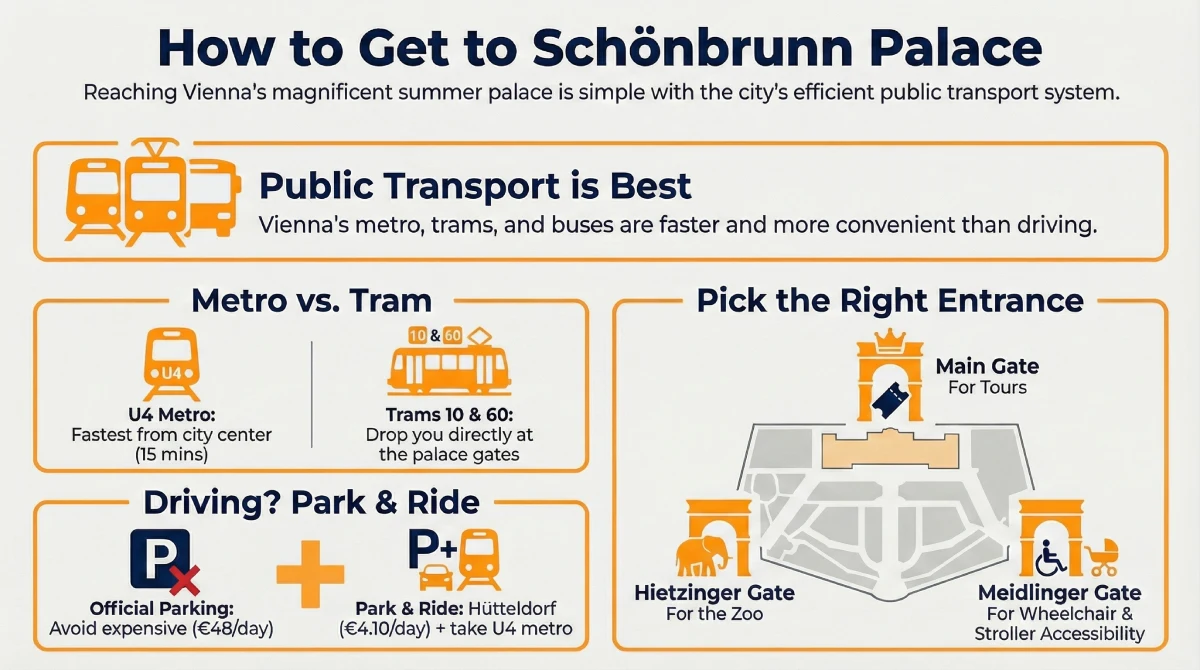
The Haupttor (Main Gate) on Schönbrunner Schloßstraße is what you’ll see in most photos. Those impressive white stone columns topped with golden eagles? That’s your landmark. This is where most tour groups arrive, and it’s the obligatory entrance if you’ve booked a timed ticket for the Imperial or Grand Tour. The ticket office and security screening are right here, which also means this is where the crowds concentrate during peak season.
But there are smarter alternatives depending on what you want to see. The Hietzinger Tor on the western side is your best bet if you’re heading to the zoo or the Palm House. Why walk across the entire estate when you can enter directly where you need to be? Meanwhile, the Meidlinger Tor on the eastern perimeter offers the smoothest path for anyone using a wheelchair or pushing a stroller, with paved surfaces instead of the historic gravel you’ll encounter at the main entrance.
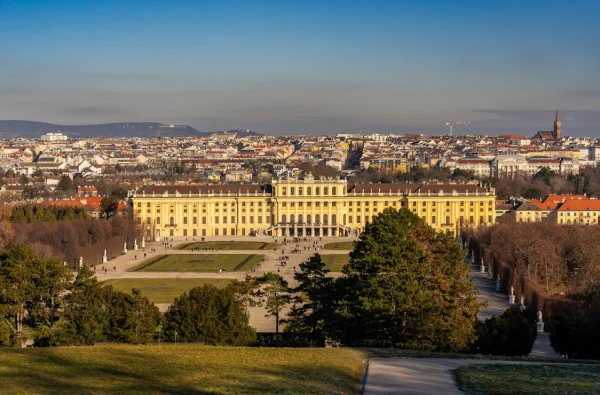
There’s also the Maria Theresia Tor at the elevated southern end, which connects to the Gloriette. This one’s less known but incredibly useful if you want to start at the top and walk downhill rather than facing that steep climb under the summer sun.
How do I get to Schönbrunn Palace by public transport?
Vienna’s public transport system makes reaching Schönbrunn refreshingly straightforward. The network is run by Wiener Linien, and honestly, it’s one of those rare city systems that actually works the way it’s supposed to.
Taking the U4 metro line
U4 line is your fastest friend.
From central hubs like Karlsplatz or Schwedenplatz, you’re looking at about 12 to 15 minutes to reach the palace. During the day, trains arrive every 2 to 5 minutes, so you barely have time to check your phone before the next one pulls up. Even late at night or early morning, you won’t wait more than 7 minutes.
Schönbrunn station is the default for most visitors, especially if you’re doing the palace tour. When you get off the train, head toward the front (that’s the western direction if you’re coming from the center). You’ll cross a glass bridge over the Wien River, which gives you a nice view of the surrounding architecture. Once you’re on the street level, you’ve got about a 7 to 10-minute walk to the main entrance.
Getting by tram
Sometimes the tram is actually the better choice, especially for families with small children or anyone with mobility considerations, these trams eliminate that walk from the metro station.
Trams 10 and 60 stop directly in front of the palace on Schönbrunner Schloßstraße. Unlike the metro stations, which require a short walk, these trams deposit you essentially at the front door.
Tram 60 is valuable if you’re arriving at Wien Westbahnhof. This is one of Vienna’s major train stations, and rather than navigating metro transfers, you can hop on the 60 and arrive at Schönbrunn in about 15 to 20 minutes.
Tram 10 connects the western districts like Dornbach and Unter St. Veit with Schönbrunn, making it useful if you’re staying in accommodation outside the tourist center.
Getting by bus
Then there’s Bus 10A, which is your secret weapon for lateral connections.
This line links the palace with areas that the U4 doesn’t reach, running from Heiligenstadt in the north down to Meidling in the south. It stops right at Schloss Schönbrunn, just like the trams.
If you’re coming from southern Vienna or areas without direct metro access, the 10A saves you from complicated transfers through the city center.
From Vienna's main train stations
If you’re coming into Wien Hauptbahnhof (Vienna’s main central station), the most reliable option is taking the U1 (red line) to Karlsplatz, then transferring to the U4 (green line) toward Hütteldorf. It is a straightforward journey that takes about 20 to 25 minutes.
Wien Meidling is interesting because it’s often overlooked, but it’s actually one of the smartest arrival points for Schönbrunn. If you’re taking a Railjet train from the airport or from southern Austria, you can request to stop at Meidling instead of going all the way to Hauptbahnhof.
From there, take the U6 (brown line) just one stop to Längenfeldgasse. The best part? You can transfer to the U4 right across the same platform—no stairs required.
Is it possible to go by car?
Vienna actively manages traffic around major attractions, and Schönbrunn sits in a controlled parking zone (Kurzparkzone). What that means practically is that casual street parking isn’t really an option unless you’re prepared to deal with strict time limits and prepaid parking tickets.
Where to park your car
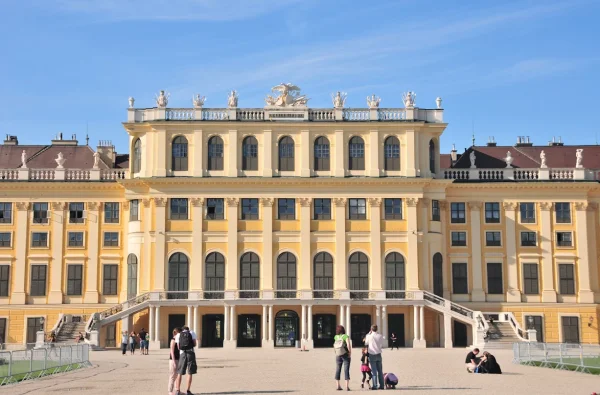
The official parking is the Arrival Centre on Schönbrunner Schloßstraße 50, right across from the main palace entrance. This is the APCOA-operated lot designed specifically for palace visitors.
Capacity-wise, it handles about 230 cars and 48 buses, so during peak summer season or the Christmas market, it can fill up by mid-morning. The pricing reflects its premium location: you’re starting at €4.80 per hour, with a daily maximum hitting €48.00. That’s not a typo.
The upside? You’re literally across the street from the entrance.
There’s also the Zoo Parking at Seckendorff-Gudent-Weg, about 500 meters from the palace. It’s positioned closer to the zoological garden and works well if that’s your primary destination. Just be aware that the approach to the side entrances from here involves some steep inclines, which can be challenging if you’re on foot with luggage or mobility limitations.
Park & Ride: a smarter alternative
Here’s the strategy that locals and savvy travelers use: Park & Ride facilities on the city outskirts combined with public transport.
The two key P&R sites are Ottakring (connected to the U3 line) and Hütteldorf (the western terminus of the U4 line). If you’re driving into Vienna from the west, Hütteldorf is particularly brilliant. You park for about €4.10 to €4.40 for the entire day, then take the U4 straight to Schönbrunn. The metro journey is roughly 10 to 12 minutes, trains run constantly, and you’ve saved yourself over €40 in parking fees plus the headache of navigating central Vienna traffic.
Can you walk to Schönbrunn?
Yes, you can walk to Schönbrunn, but whether you should depends entirely on where you’re starting and what kind of experience you’re after.
From the absolute city center (let’s say Stephansplatz), you’re looking at roughly 5 to 6 kilometers, which translates to about an hour and fifteen minutes of steady walking.
The more practical walking scenario involves combining it with other attractions. If you visit the Technical Museum (Technisches Museum Wien) first, you can walk to Schönbrunn through the Auer-Welsbach-Park. This is a genuinely pleasant route that takes about 15 minutes and covers just over a kilometer. You cross the Wien River, gain a bit of elevation (roughly 134 feet), and arrive at the palace through quieter residential areas. It’s one of those green corridors that makes you feel less like a tourist following a map and more like someone discovering the city naturally.
Visiting the Hofburg, Belvedere, and Schönbrunn
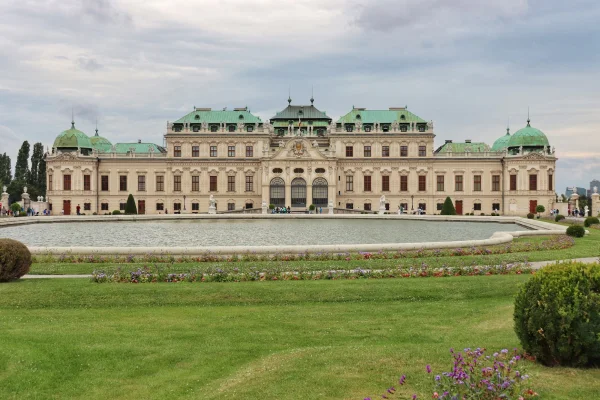
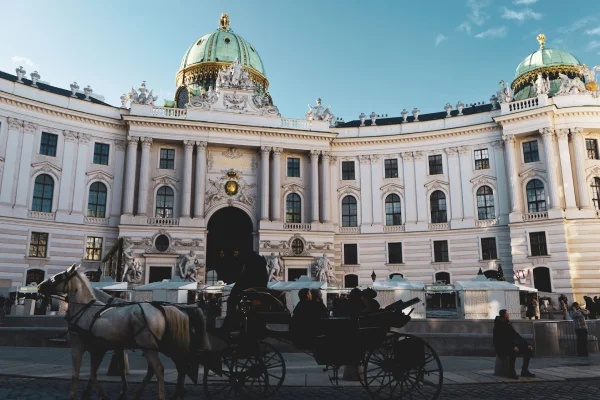
Most visitors to Vienna want to hit the “Habsburg triangle”: the Hofburg (winter palace), Schönbrunn (summer palace), and Belvedere (baroque palace complex). Connecting these three is easier than it looks if you understand the transport logic.
Between Schönbrunn and the Hofburg, you’re using the U4 line as your spine. From Schönbrunn, take the U4 toward Heiligenstadt and get off at Karlsplatz for the opera side of the Hofburg, or continue to Stadtpark if you want to walk through the park. The ride takes about 15 minutes, and you’re moving straight through the heart of the city. If you’re heading to the Museum Quarter side of the Hofburg complex, get off at Kettenbrückengasse and walk past the famous Naschmarkt.
Connecting Schönbrunn to the Belvedere requires one transfer since the Belvedere sits on the southeastern edge. The standard route is taking the U4 to Längenfeldgasse, transferring to the U6 (brown line) toward Siebenhirten, getting off at Wien Meidling, then catching the S-Bahn to Quartier Belvedere station. It sounds complex, but the entire journey is about 25 to 30 minutes.
The simpler alternative for this route is Tram D. Take the U4 to Karlsplatz, then catch Tram D toward Absberggasse, which stops directly at Schloss Belvedere. It’s one transfer, runs on the surface so you can see the city, and takes roughly the same time as the metro combination.
The key insight for most visitors is that you don’t need to see all three palaces in one day. Each deserves several hours if you’re including the interiors and grounds. Schönbrunn alone can consume 3 to 5 hours when you factor in the palace tour, gardens, Gloriette climb, and potentially the zoo. The Hofburg complex includes multiple museums that could fill an entire day. The Belvedere has both upper and lower palaces plus significant art collections.
Other things to do in Vienna
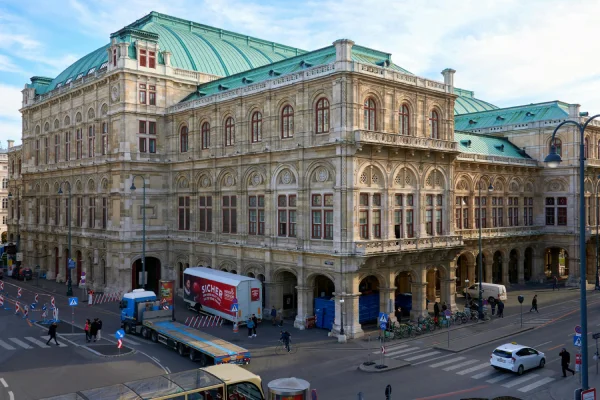
Vienna State Opera tickets >
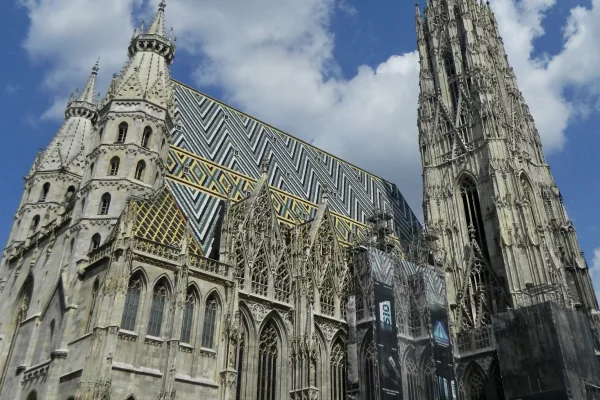
St Stephen’s Cathedral tickets >


