Schönbrunn Maze

We’ve put together a complete guide with everything you need to visit the Schönbrunn Maze, from its fascinating imperial origins to practical tips to ensure your experience in Vienna is perfect.

Schönbrunn Labyrinth

Support when you need it

Customer service to help you with all your needs from 8:00 a.m. to 7:00 p.m.

Fast and online booking

Choose the best option for your needs and preferences and avoid the lines.

Top attraction in Vienna

Discover Vienna’s most famous palace and step into centuries of imperial history.

What is the Schönbrunn Labyrinth?

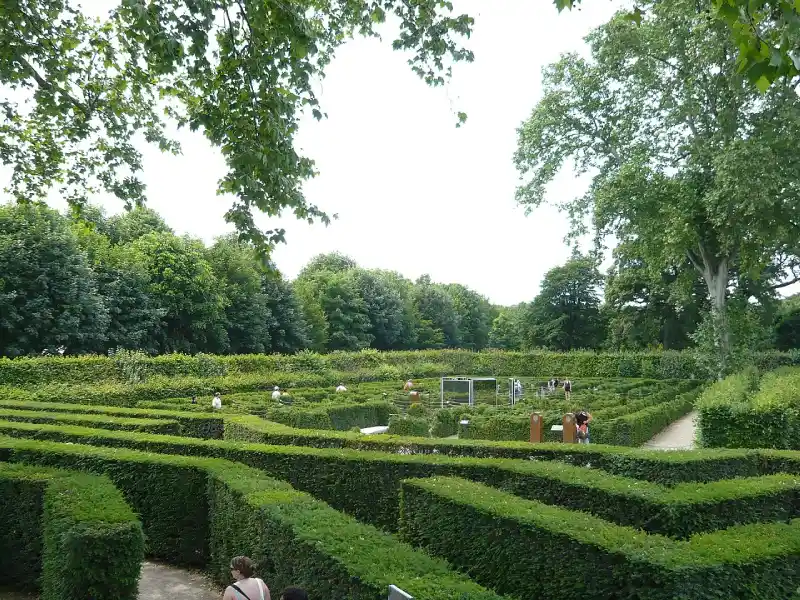
As you stroll through the gardens of Schönbrunn Palace, you will eventually come across the maze. Its original design dates back to around 1720, a time when European nobility saw these green spaces not just as decoration, but as venues for recreation and social games. However, the maze you see today is actually a faithful reconstruction, the initial design was abandoned and neglected until it almost completely disappeared by the late 19th century.

It was Empress Maria Theresa of Austria who gave much of this palace complex its definitive shape. As one of the most influential rulers of the Habsburg dynasty, she was a woman of imposing political and aesthetic vision who turned Schönbrunn into her favorite summer residence. Under her reign, the palace and its grounds became the epicenter of court life.

For her and her family, the maze was more than a botanical curiosity; it was a symbol of prestige. Baroque-era mazes were built so that court guests could get lost among the hedges, hold private conversations, and enjoy an environment that blended the order of nature with human ingenuity.

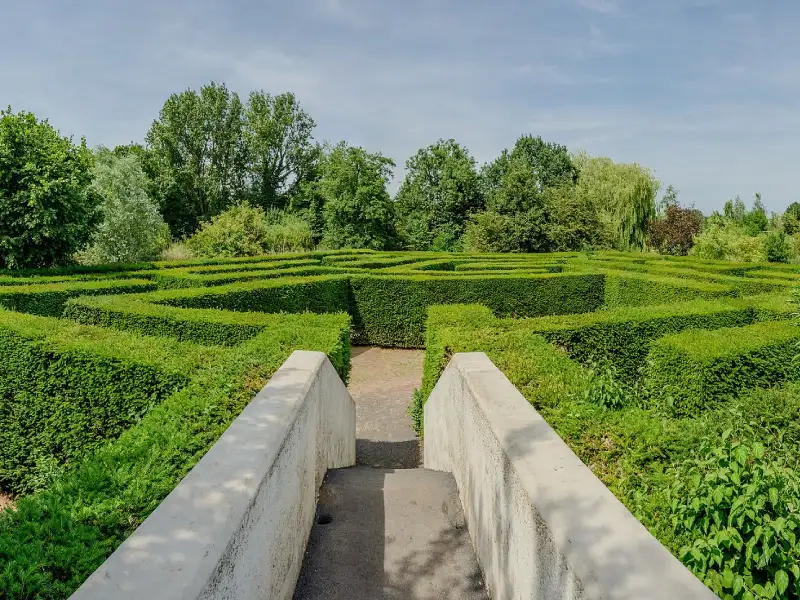
In the late 1990s, the decision was made to restore this space based on historical 18th-century plans. Thousands of hedges were planted to recreate three distinct areas. While it is popularly known as the Schönbrunn Maze, it is actually a complex of three zones designed for different ages:

  1. The Maze (Irrgarten): This is the historical reconstruction of the original 1720 design. It is the classic maze we all imagine: a network of paths formed by tall yew hedges where the goal is to find your way to the center.
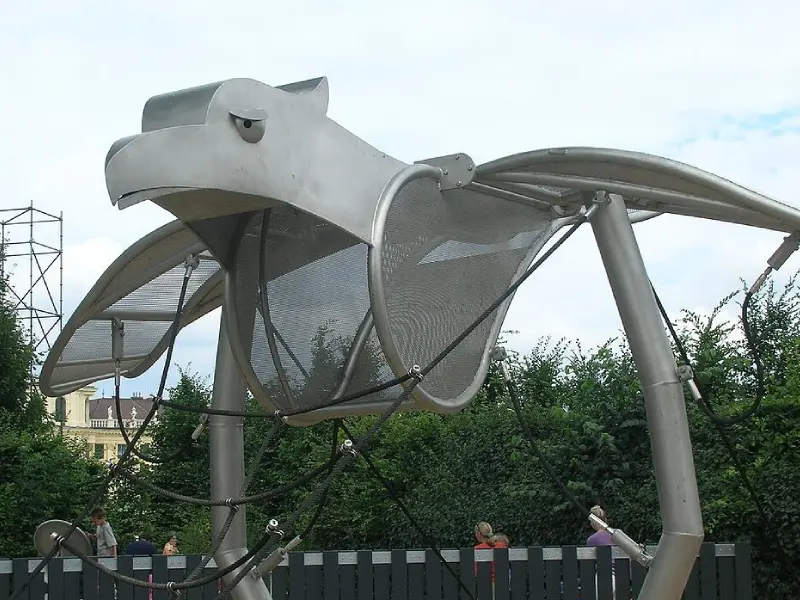
  2. The laberint: Unlike the Maze, this area has a much more playful and modern approach, designed specifically to stimulate the senses. It’s not so much about “getting lost” as it is about interacting with your surroundings.
  3. The Labyrinth: This is undoubtedly a favorite for the little ones. Designed by maze expert Adrian Fisher, it is essentially an outdoor puzzle playground.

Reconstructing the maze was a way to return that playful spirit to the palace that the monarchy loved so much. Walking through its green walls allows you to experience firsthand how emperors and their children used to have fun. In fact, one Reddit user captured the vibe perfectly, saying that “it’s like walking through a forest in a mid-90s 3D game.”

Do I need a ticket to access the Schönbrunn Maze?

While the vast majority of the gardens surrounding the palace are free and open to the public, please note that the Schönbrunn Maze is not free. To enter and test your sense of direction among the hedges, you will need a specific ticket, as this area is managed independently from the general park.

If you want a hassle-free, full experience, the best option is the Classic Pass. This ticket allows you to visit Schönbrunn Palace, the Crown Prince Garden, the Orangery, the Maze, and the Gloriette terrace for the best panoramic views of Vienna.

Traveling with kids? This is a mandatory stop! Not only will they have a blast in the maze, but the palace also houses the Children’s Museum (Kindermuseum), where they can dress up as princes or princesses and learn about daily life at court in a fun way. It’s the perfect way to combine history and play in a single afternoon.

How to get to the Maze?

Getting around Vienna is incredibly easy thanks to its efficient public transport, and reaching this imperial corner is no exception. The palace is located slightly outside the city center but is very well connected:

  • Metro: The fastest option is to take the U4 line (U-Bahn) and get off at the “Schönbrunn” station. From there, it’s just a few minutes’ walk following the signs.
  • Tram: Lines 10 and 60 also drop you very close to the main entrance.


Once you enter the main gate, the Schönbrunn maze is located in the eastern part of the gardens, past the main flowerbeds (Great Parterre).

Is it open all year round?

Unlike the main gardens, which are open almost every day, access to the maze is seasonal. It typically opens from late March or early April until early November. During the winter months, maintenance requirements and ground conditions (low temperatures and snow) make the visit unsafe, so it remains closed.

Other things you can see in the gardens

The Schönbrunn gardens are immense, so much so that you could spend an entire morning exploring them. The space blends free public areas, where locals go for runs or walks, with monumental paid areas:

Free areas in the garden

These are the free spots you can enjoy during your visit to the Schönbrunn Labyrinth:

  • The Great Parterre: The central area with fountains and mythological statues, perfect for photos with the palace in the background.
  • Roman Ruins: A collection of structures intentionally designed to look like ancient ruins, surrounded by lush greenery.
  • Woodland paths: Miles of shaded paths under centuries-old trees.
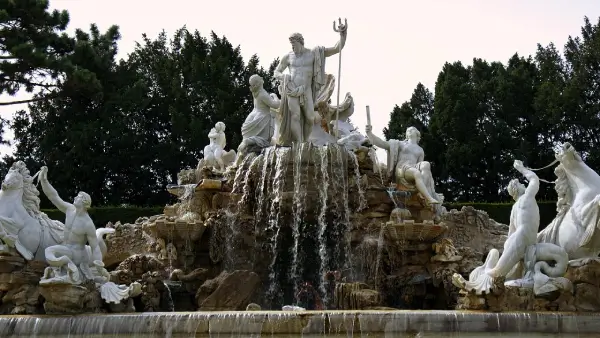
  • The Neptune Fountain: An imposing structure at the foot of the hill.
The Neptune Fountain Schönbrunn

Areas requiring a ticket

Besides the Schönbrunn Labyrinth, these places require a ticket for access:

  • Schönbrunn Palace (Interiors): Step back in time and discover how the monarchy lived.
  • Crown Prince Garden: A private garden with floral walkways and a more intimate feel.
  • The OrangeryA space for exotic plants and citrus trees, historically used for celebrations and concerts.
  • Desert House (Wüstenhaus): Explore a unique desert landscape and botanical collection.
  • Schönbrunn Zoo: Visit the world’s oldest zoo, home to diverse wildlife and historic glass houses.
  • Palm House (Palmenhaus): Immerse yourself in a lush exotic jungle inside this iconic greenhouse.
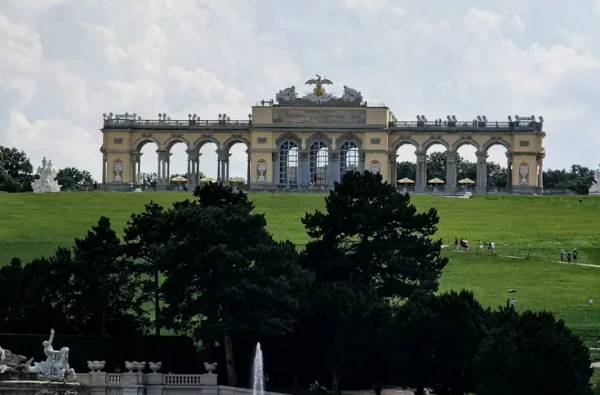
  • The GlorietteWhile you can walk up to it for free, accessing the rooftop terrace for the panoramic view requires a ticket.
Gloriette in Schönbrunn's garden

Other things to do in Vienna

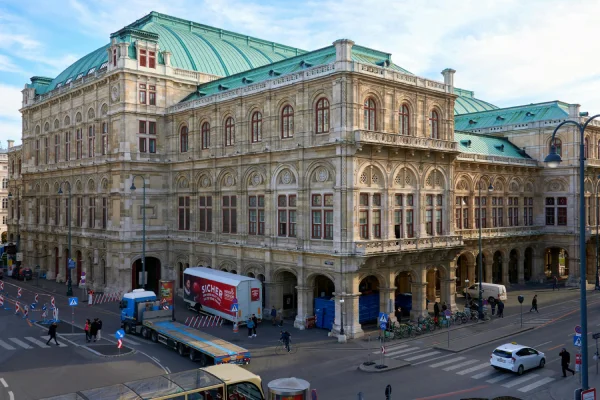
Vienna State Opera tickets >

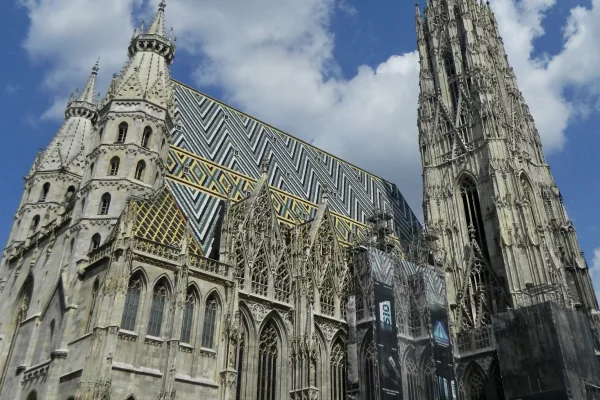
St Stephen’s Cathedral tickets >