
Visit Schönbrunn Palace
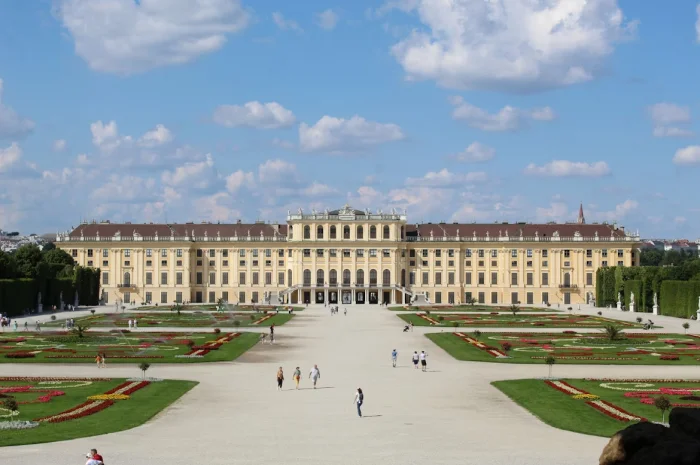
If you are planning a trip to Vienna, the Austrian capital, Schönbrunn Palace, of the Habsburg dynasty, should be on your list of what to see. Below, we explain everything you need to know so you can plan your visit to Schönbrunn Palace and enjoy its spectacular gardens.
Support when you need it
Customer service to help you with all your needs from 8:00 a.m. to 7:00 p.m.
Fast and online booking
Choose the best option for your needs and preferences and avoid the lines.
Top attraction in Vienna
Discover Vienna’s most famous palace and step into centuries of imperial history.
What can you see inside Schönbrunn?
Would you like to visit Schönbrunn but are unsure about what you will see inside?
Schönbrunn is one of the top three places to visit in Vienna (along with the Hofburg and the Belvedere), so it is definitely worth adding to your itinerary, regardless of how much time you have in the city.
Here are a few hints of what awaits you:
Imperial Rooms
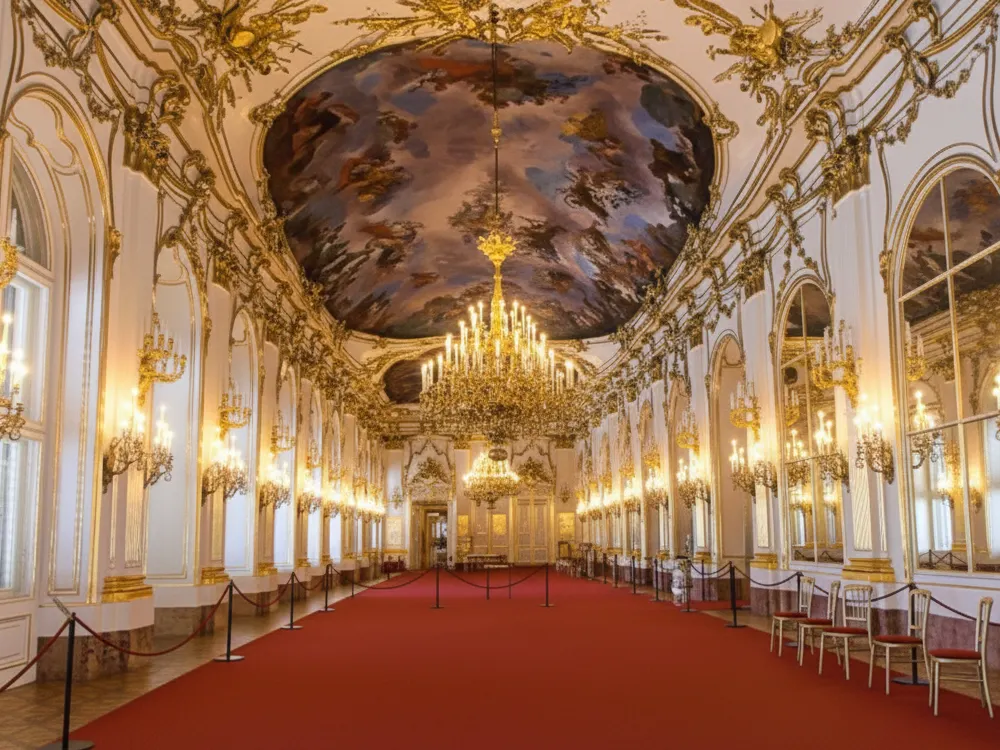
The Schönbrunn Palace houses a total of 1441 rooms. Although the majority remains closed, 45 of them are open to the public, so you will have the possibility of getting to know the grand lifestyle that Empress Maria Theresa and Emperor Franz Joseph and Sissi had.
One of the most striking rooms is the Great Gallery, whose decoration, dominated by white and gold, enchanted all the attendees of the grandiose banquets, balls, and events of historical importance that were organized in it.
On the other hand, the Blue Chinese Salon, dedicated as a ceremony room, stands out for its oriental design and its characteristic 18th-century wallpaper, an authentic artistic jewel that you will be able to enjoy during your visit to Vienna.
The Gloriette
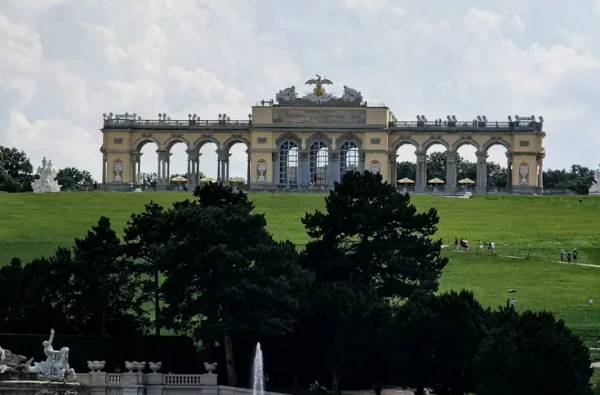
Upon leaving the Schönbrunn Palace, your next obligatory stop should be to visit the Gloriette, located on the palace hill. It consists of an impressive neoclassical structure that, besides being an architectural monument that was historically used as a dining room and reception hall, today has become the perfect viewpoint to enjoy the best views of the Austrian capital.
From this spot you will be able to appreciate the baroque gardens, the elegant palace, and, as if that were not enough, you will have the opportunity to observe the city of Vienna on the horizon.
In short, it is the ideal place for photography enthusiasts to dedicate a few minutes to immortalizing their visit to the Schönbrunn Palace. Are you one of them?
The Gardens
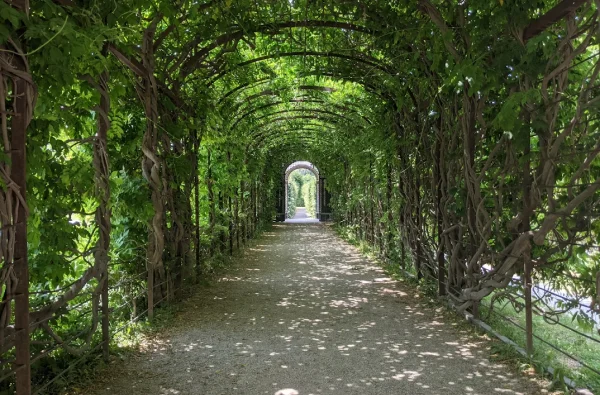
Continuing with the outdoor spaces, the gardens that surround the Schönbrunn Palace are an incredible example of baroque landscaping.
In them you will find a series of sculptures and historic buildings such as, for example, the impressive Neptune Fountain, a sculptural work that dominates the environment, or the Roman Ruins, an area that will transport you to antiquity.
Furthermore, we recommend you visit the Crown Prince Garden, the Palm House, a 1,200 square meter greenhouse that exhibits an amazing collection of exotic species, and, without a doubt, you should make a note to visit the Schönbrunn Zoo (Tiergarten Schönbrunn), which is not only famous for its species, but for being the first zoo in the world, founded by the Habsburgs in 1752.

The Maze
Finally, another of the spaces you will find inside the Schönbrunn Palace is is its maze, designed by Günter Beltzig.
As if it were a fantasy movie, this tourist site in Vienna is one of the most popular attractions for families looking to take an outdoor stroll and have fun together.
Therefore, if you will be traveling with children, we recommend you include this activity in your planning. Besides enjoying the green of the large hedges that decorate it, you will be able to put your sense of orientation, your patience to the test and have fun while trying to find the exit. Will you be able to achieve it?
Why is Schönbrunn Palace worth visiting?
Want a short answer? Yes, it’s totally worth it.
If you like historical places and enjoy baroque architecture, visiting the Schönbrunn Palace in Vienna will be an experience that will be totally worthwhile. This place, declared a World Heritage Site by UNESCO in 1996, offers the possibility of knowing what the lifestyle of royalty was like, allowing you to enter many of the rooms that the Habsburgs used in their daily life. In addition to its luxurious rooms, you will be able to explore its gardens, fountains, and sculptures, while enjoying the panoramic view from the hill to appreciate the landscape from this point in Vienna.
Historically, the palace represents the power of the House of Habsburg, the dynasty that governed vast European territories for centuries. Originally conceived at the end of the 17th century under Emperor Leopold I, Schönbrunn was transformed into a dazzling summer residence and the center of imperial life in the 18th century, symbolizing the imperial luxury of the time. Its 45 open rooms will allow you to delve into the intimate life of the court, especially that of Emperor Franz Joseph and Empress Elisabeth, up to ceremonial halls where European historical events were celebrated.
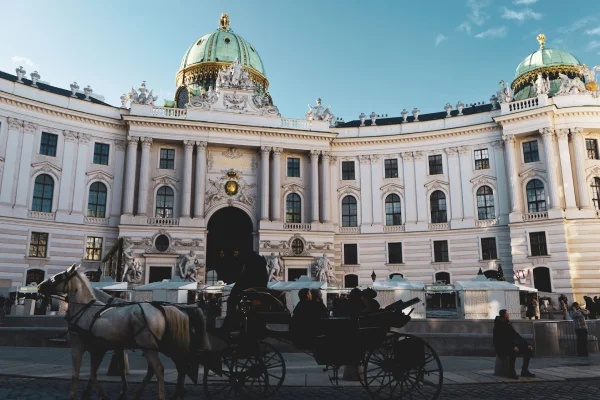
To enjoy a more integral and temporal vision of Austrian culture during your visit to Schönbrunn Palace, you can complement your trip with other key monuments in Vienna, such as the Hofburg Palace, which was the dynasty’s winter residence, a gigantic complex from where the Habsburgs ruled for more than 600 years (the political and administrative center).
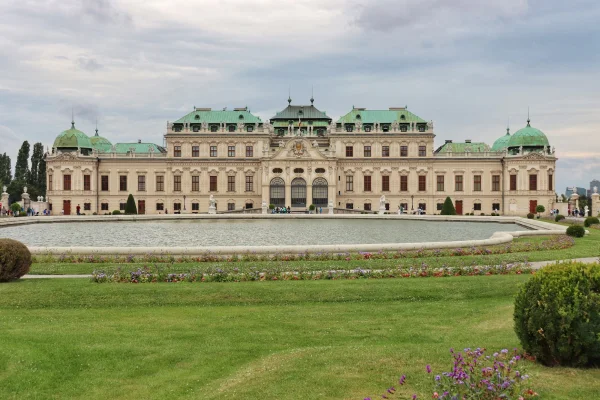
Or you can also visit the Belvedere Palace, built at the beginning of the 18th century for Prince Eugene of Savoy, another example of Viennese baroque architecture that also houses an incredible art collection, by having the Museum of Baroque Art, the Museum of Medieval Art, and the Austrian Art Gallery inside.
If you decide to visit the Schönbrunn Palace, we are sure that you will enjoy its amazing rooms and fall in love with its vast outdoor extension, where the iconic Gloriette on the top of the hill will offer you the best views. From there, you will get the ideal perspective to appreciate the scale of this World Heritage Site that holds so many years of history.
Plan your visit to Schönbrunn Palace
In this Schönbrunn Palace guide we share some logistical details that you should take into account to organize your visit:
Schönbrunn Palace visiting hours
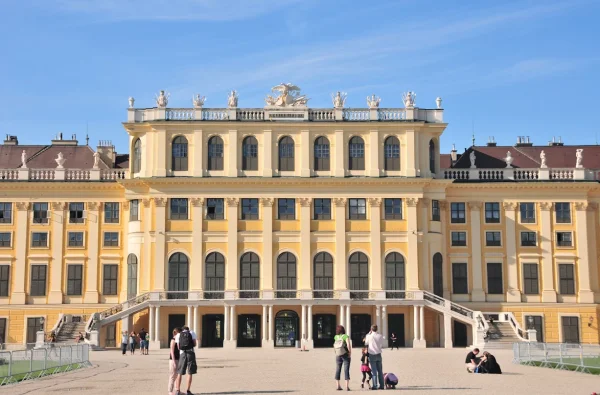
The palace is open every day, including holidays, but hours vary depending on the season:
- April to October: Opens from 8:30 am to 5:30 pm. In summer (July and August) it is open until 6:30 pm.
- November to March: From 8:30 am to 5:00 pm.
How to get to Schönbrunn?
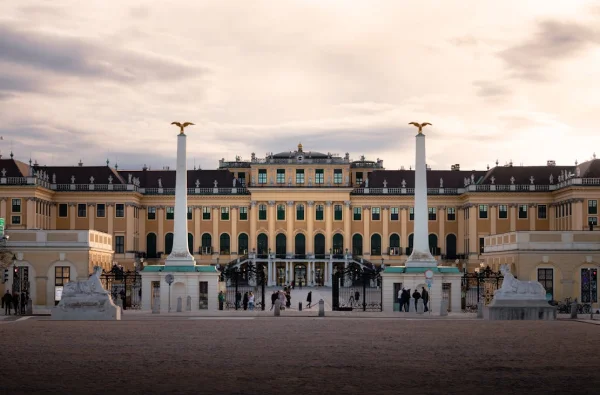
If you wonder how to get to Schönbrunn Palace, you can do so by car or by using Vienna’s public transport:
- Metro (U-Bahn): The most comfortable option is to take the U4 line and get off at the Schönbrunn station. Upon exiting you will find the main entrance to the palace just a few minutes walk away.
- Tram: You can use lines 10 or 60 to the Schloss Schönbrunn stop.
- Bus: Line 10A also stops at Schloss Schönbrunn.
How long to visit Schönbrunn Palace?
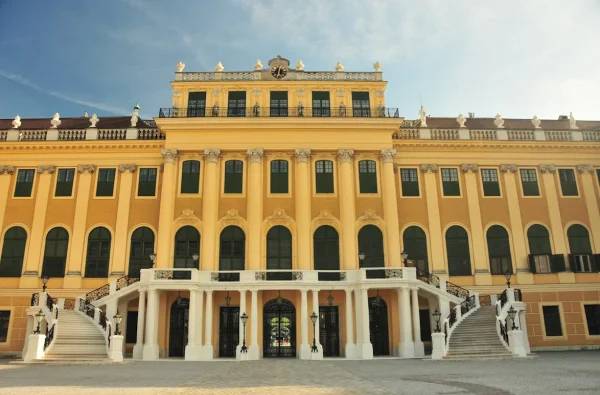
It all depends on your plans and the sites you want to visit. Our recommendation is to reserve at least half a day to enjoy it without rushing. These are approximate durations of how long it would take you to visit certain areas of the palace:
- Interior only: The short tour (Imperial Tour, which includes 22 rooms) lasts about 30-40 minutes. For its part, the long tour (Grand Tour, which will allow you to see 40 rooms) lasts about 50-60 minutes.
- Palace and Gardens: If you want to take the palace tour and enjoy a walk to the Gloriette, set aside 3 to 4 hours.
- Complete experience: Finally, if you want to include the zoo, the maze, the Children’s Museum or the Palm House, you will need a whole day to dedicate enough time to each space.
When is the Best Time to Visit Schönbrunn Palace?
If you want to avoid queues and enjoy the climate, our recommendation is to visit Schönbrunn Palace in Vienna during spring (April to June) or autumn (September and October). The climate is pleasant and the gardens look perfect, so you can enjoy the vegetation that surrounds the palace.
What should you visit near Schönbrunn?
Before visiting Schönbrunn Palace, you should know that its immediate surroundings are packed with attractions that make the trip worth it: from natural gems to sculptures and museums that will help you learn more about this dynasty. Beyond its imperial rooms, the palace grounds border a charming private garden, the world’s oldest zoo, a Palm House, a fantastic café with views, and much more, the details of which we help you discover below:
The Privy Garden (Kronprinzengarten)
Originally designed for the exclusive use of the imperial family, this place, also known as the Crown Prince’s Garden, is characterized by a formal, geometric design reminiscent of the gardens of Versailles. Its carefully trimmed hedges, small fountains, and abundant flowers create the perfect atmosphere for unwinding and enjoying the outdoors during your trip. If you like Baroque landscaping in its most refined form, make a note of the name of this garden, where the heirs to the Habsburg throne used to enjoy walks every afternoon.
Tiergarten Schönbrunn or Vienna Zoo
As we mentioned before, Schönbrunn Palace is a historical monument that houses the world’s oldest zoo. Located within the palace grounds, it offers a unique blend of imperial history and modern conservation. Despite its age, the zoo is a pioneer in animal welfare and the breeding of endangered species, and is especially famous for its giant pandas. Most of the enclosures are integrated into original historical structures, such as the Imperial Breakfast Pavilion, which now houses the zoo’s restaurant. Visiting the Tiergarten is an ideal activity if you plan to travel with family or are a nature lover. We are sure you will be surprised by its rich biodiversity!
The Palm House (Palmenhaus)
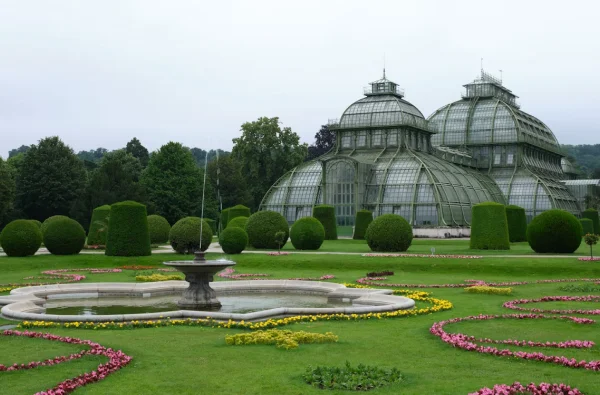
This is an impressive 19th-century structure made of iron and glass. Furthermore, as a curious fact, you should know that it is one of the largest greenhouse structures of its kind in the world. Built in 1882, this 1,200 square-meter greenhouse was designed to house an astonishing collection of exotic botanical species from the remotest corners of the Austro-Hungarian Empire and from scientific expeditions. Its design is divided into three climate pavilions (warm, temperate, and cold), recreating the necessary habitats for plants from various regions, from prehistoric ferns to gigantic palms. If you decide to include it in your visit to Schönbrunn Palace, you will enjoy a journey through different climate zones and have the opportunity to see the imperial fascination with science and botany.
Vienna Technical Museum
Speaking of science, very close to the palace’s main entrance you will find the Vienna Technical Museum, a place that holds one of Europe’s most important technological collections, dedicated to industry, transport, energy, and science in Austria. Inside, you will find interactive exhibitions that range from antique cars, like Empress Elisabeth’s carriage, to steam engines and locomotives, such as the 12.10, a superlative steam locomotive. Therefore, it is a very visual way to understand how technology has evolved over the centuries. The building has areas specially designed for families, with educational games that help children learn creatively and understand complex concepts in a much simpler way. In short, it’s a must-see if you are traveling with children!
Café Gloriette
Located inside the majestic Gloriette structure, on the Schönbrunn Palace hill, the Café Gloriette offers the perfect combination of history, architecture, and gastronomy. The Gloriette was originally designed as an imperial dining room and reception hall, and today its interior houses an elegant café where you can enjoy Viennese specialties, such as apple strudel (Apfelstrudel) and the typical chocolate cake, Sacher cake (Sachertorte), along with a delicious coffee or an imperial breakfast. As you can imagine, the café’s main attraction is its location, as it offers panoramic views of the entire palace complex, the gardens, and the beautiful city of Vienna. Sounds incredible, don’t you think?
The Neptune Fountain (Neptunbrunnen)
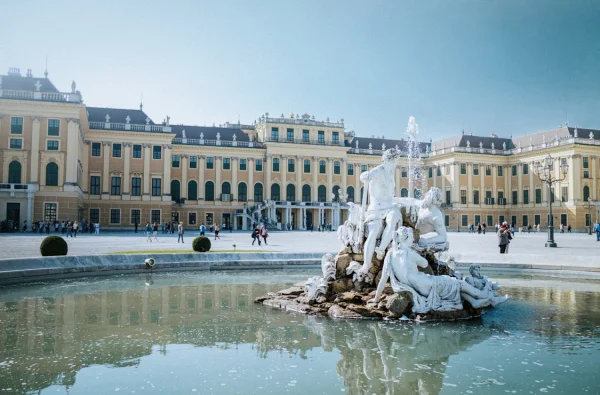
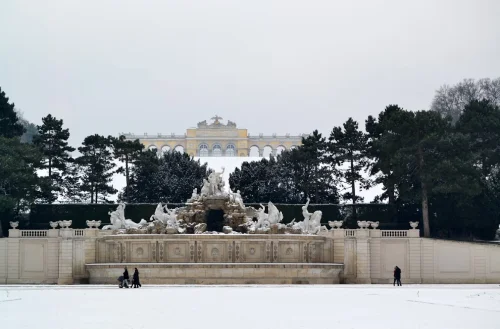
The Neptune Fountain represents one of the most distinctive and emblematic elements of the Schönbrunn gardens. Excavations to build the large basin began in 1776, when Empress Maria Theresa decided to renovate and further embellish the imperial gardens. Four years later, the work concluded with the creation of a majestic baroque sculptural composition that impresses both with its size and the richness of its details. The scene depicts the powerful sea god, Neptune, standing on a shell pulled by tritons and sea creatures. Between the 16th and 18th centuries, the figure of Neptune became a frequent motif in European palaces and gardens, as monarchs used it as a symbol of power, stability, and control over the destinies of their people.
Is it possible to visit the Hofburg and the Belvedere together with Schönbrunn?
Although the technical answer is yes, our recommendation is that you prioritize the quality of the experience over the quantity of sites you visit at once.
The Austrian capital is home to a trio of imperial and royal palaces that you can visit: Schönbrunn Palace, Hofburg Palace, and Belvedere Palace. However, visiting them in a single day will not allow you to enjoy them as they truly deserve.
As we have shared previously, Schönbrunn is a massive complex that includes not only the palace with its 45 open rooms, but also its vast gardens, the Gloriette, the Vienna Zoo, and the Labyrinth. A complete and pleasant visit to Schönbrunn easily requires between half a day and a full day.
On the other hand, the Hofburg, the former winter residence and the administrative center of the Habsburgs for six centuries, houses the Spanish Riding School, the Imperial Apartments, the Sissi Museum, and the Silver Collection, each of which requires at least two or three hours to be properly appreciated.
Finally, the Belvedere Palace, divided into the Upper and Lower Belvedere, is essential for its impressive baroque architecture and, above all, for housing the Austrian Gallery with the most important collection of works by Gustav Klimt, including The Kiss.
Trying to visit these three pillars of Viennese history in less than three full days results in a very rushed experience. Besides potentially causing physical tiredness, you will lose the ability to assimilate the historical richness of each site, its artistic value, and the architectural magnitude they represent. Remember that the true value of these monuments lies in strolling unhurriedly through the baroque gardens of Schönbrunn, reflecting on Sissi’s life at the Hofburg, or contemplating modern art at the Belvedere. The key to enjoying Vienna is to avoid wanting to see the most things in the shortest time possible. It will be worth it to dedicate sufficient time to all these spaces.
Frequently Asked Questions about Visiting Schönbrunn Palace
Yes, it is highly recommended. Schönbrunn Palace is one of the most visited sites in Vienna, and tickets often sell out during peak seasons. Booking online guarantees your entry and preferred time slot.
The Classic Pass is the most complete option, as it includes access to the palace rooms, the gardens, and additional highlights such as the Maze, Labyrinth, and the Gloriette viewpoint.
For a basic visit of the palace interiors, plan at least 1.5 to 2 hours. If you want to explore the gardens and extra attractions, allow half a day or more.
Absolutely. A guided tour provides expert insights into the history of the Habsburg dynasty, the architecture, and the symbolism behind many of the rooms and artworks. It’s the best choice if you want a deeper cultural experience.
Yes, the palace and gardens are family-friendly. Children particularly enjoy the Maze and Labyrinth as well as the Schönbrunn Zoo, the oldest zoo in the world.
Other things to do in Vienna
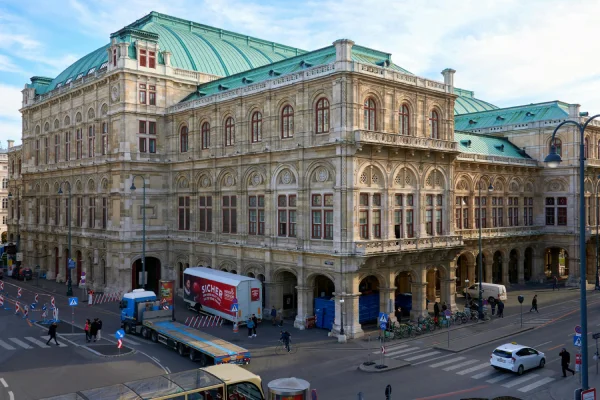
Vienna State Opera tickets >
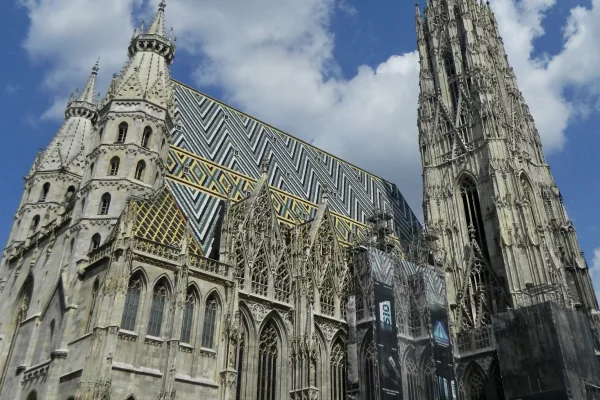
St Stephen’s Cathedral tickets >


