
The Schönbrunn Orangery is undoubtedly a must-see stop within the palace’s stunning gardens. Here we delve into its history, how to get there, and how to make the most of your visit.
Support when you need it
Customer service to help you with all your needs from 8:00 a.m. to 7:00 p.m.
Fast and online booking
Choose the best option for your needs and preferences and avoid the lines.
Top attraction in Vienna
Discover Vienna’s most famous palace and step into centuries of imperial history.
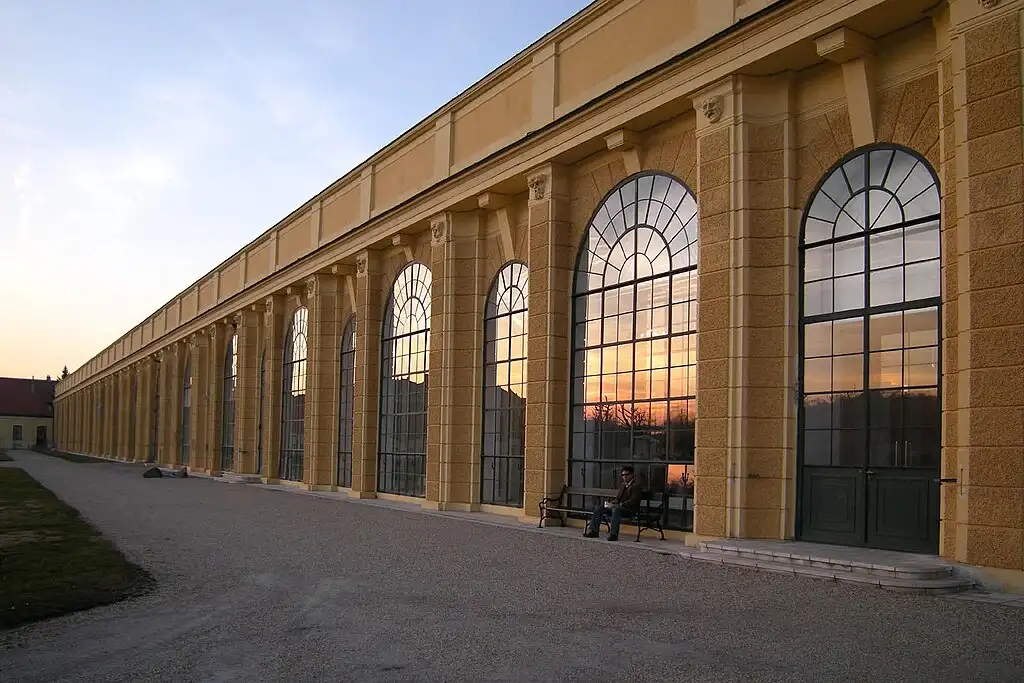
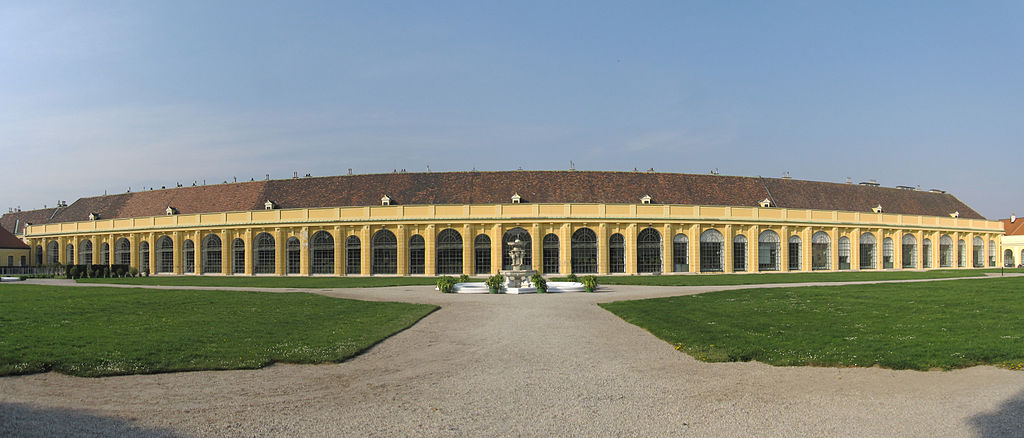
Schönbrunn Orangery, or as it’s known in German, the Orangerie, essentially, it is a structure designed to house and protect delicate citrus and exotic plants during the cold Viennese winters. In short, it could be defined as a refuge of glass and stone where orange trees could survive and, more importantly, continue to bear fruit for the imperial table.
This focus on botany and splendor reflected the era’s taste for natural sciences and the demonstration of imperial power, having an abundance of exotic fruits outside their natural season was a clear sign of wealth and prestige.
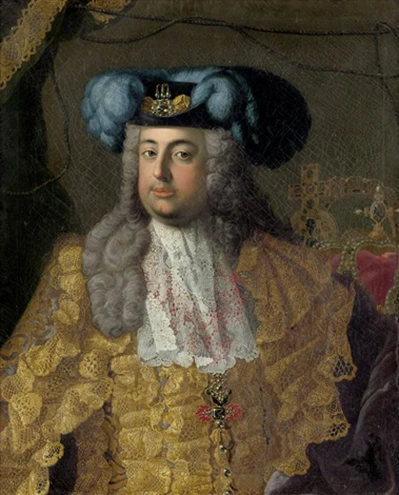
The emperor who commissioned this work, Francis I Stephen of Lorraine, was a passionate and knowledgeable naturalist, making the Orangery not merely a luxurious whim but also a practical, scientific, and very personal project for him. And this same emperor was the husband of the famous Maria Theresa, one of the most powerful and successful female rulers in European history, whose long reign solidified the Habsburg monarchy’s influence.
Its construction was commissioned by him in the 18th century, specifically between 1754 and 1755.
And where is this marvel located? It is part of the vast and majestic Schönbrunn Palace complex in Vienna, situated in the western part of the Austrian capital. It is one of the longest structures of its kind in the world, with a façade that will truly impress you.
Now, a key question: is access free? Well, you should know that the Orangerie structure itself, as part of the palace, requires a specific ticket to be visited during the day. However, it is not always open to the public for tourist visits, as its main use today is as a concert and event hall.
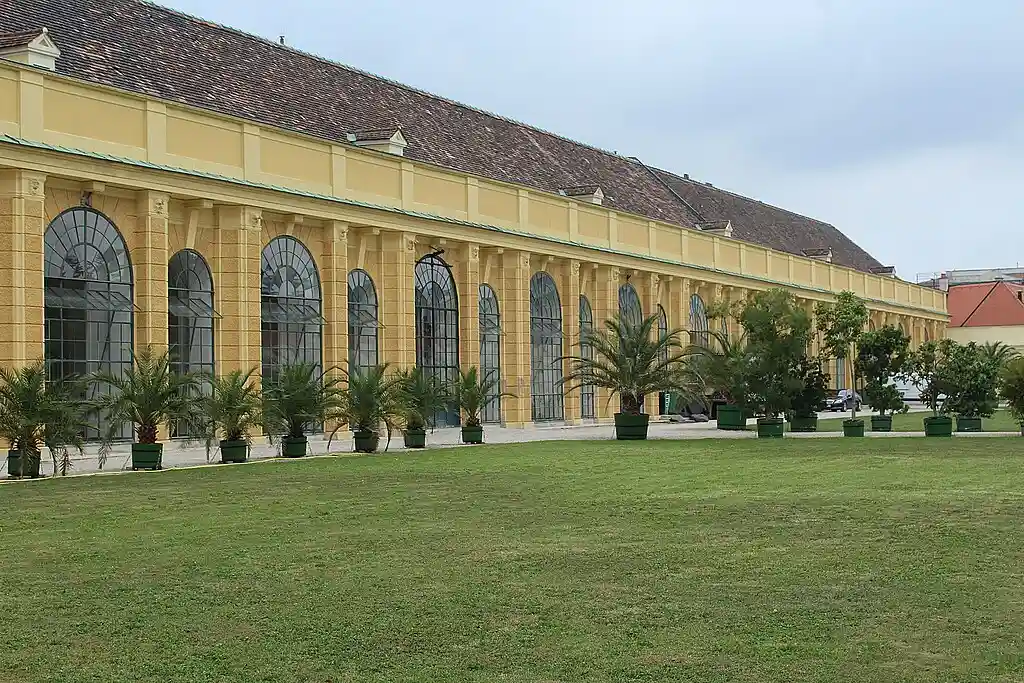
The good news is that the large surrounding garden is free and open to the public in most areas, giving you the opportunity to admire this historic structure from the outside and enjoy its setting at no cost. But if you want to go inside, especially to see a concert, you will need to buy a ticket.

The history of this place is as interesting as it is fascinating. In the Baroque era, owning and cultivating exotic plants, especially orange trees, which were a symbol of wealth and status, was essential for any European court. The Schönbrunn Orangerie was created precisely for this purpose: to serve as a winter greenhouse for the collection of citrus, palms, and other species sensitive to Vienna’s climate. This building was crucial for maintaining the palace’s green opulence, regardless of the season, allowing the main garden to look spectacular all year round.
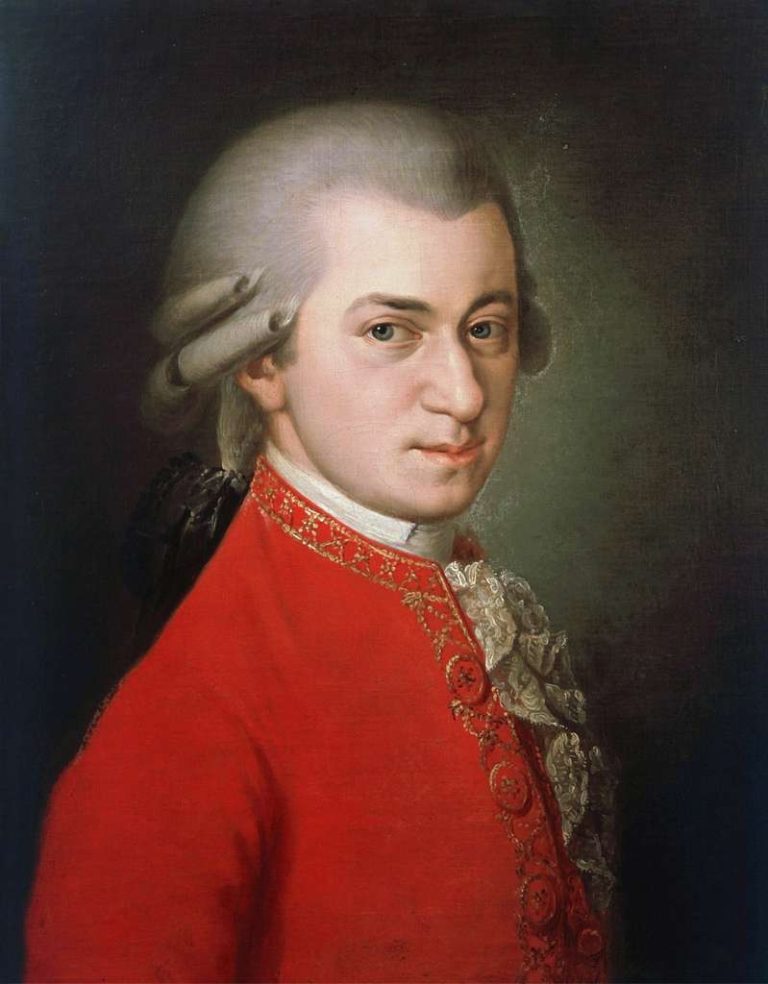
The origin of the Orangery dates back to the marriage of Maria Theresa and Francis I Stephen. This space became the ideal venue for royalty to host lavish banquets and court events, as it was spacious, well-lit, and warm, even in winter. However, if there is one event that truly marked the history of the Schönbrunn Orangery (and one you’ve surely heard of), it was the famous musical duel that took place here in 1786. Can you imagine a musical showdown? It was a head-to-head between two giants: Wolfgang Amadeus Mozart and Antonio Salieri.
Emperor Joseph II, son of Maria Theresa and Francis I, organized this event for Grand Duke Paul Petrovich of Russia and his wife. Both composers were required to present their works, and according to historical accounts, the competition was intense. Although popular history often praises Mozart’s talent, it seems that Salieri’s opera, Prima la musica e poi le parole (First the music, then the words), was considered by some to be the winner of the night, while others claimed that Mozart’s work, Der Schauspieldirektor (The Impresario), was superior. Whatever the outcome, this event cemented the fame of the Schönbrunn Orangery as a first-class cultural center.
Over time, the purpose of the Orangerie changed. During the 19th and early 20th centuries, with the fall of the monarchy and changing fashions, the ceremonial use of the Orangery significantly declined.
From being a ballroom and banquet hall, it reverted mainly to its original function: a plant storage facility, a depot for fruit and vegetables, or simply general storage for the palace’s needs. Royalty no longer used it as frequently for their grand social events.
Today, the Orangery has regained some of its former splendor. It has been restored and, while still fulfilling its original function of protecting plants in winter, it has become a prestigious concert and event hall. It is world-renowned for hosting the famous Schönbrunn Palace Concerts, where works by Mozart and Strauss are performed, reviving the musical spirit that characterized it in the past. Therefore, if you enjoy this type of music, visiting it and attending one of its concerts is a unique opportunity to experience classical music in an unparalleled historical setting.
Getting to the Schönbrunn Orangery is quite straightforward, as Schönbrunn Palace is one of Vienna’s most accessible points. These are the best options for reaching it by public transport:
Once you are inside the Schönbrunn Palace grounds in Vienna, the Orangery is just a short walk away, located in the eastern part of the gardens. Simply follow the signs that say “Orangerie” or “Orangerie Schönbrunn.”
It’s a very pleasant stroll that allows you to enjoy part of the garden and the surrounding architecture. If you are going specifically for a concert, the entrance to the Orangery is often managed through a specific gate in that area. In this case, you can ask the on-site staff for help with directions, but don’t worry, you won’t get lost!
Accessibility to the Schönbrunn Orangery varies depending on whether you visit during the day or at night to attend an event:
At this point, it is worth remembering that there are other free-access points of interest within the Schönbrunn Palace garden that you can enjoy without an entrance ticket. For example, you can walk up to the spectacular Gloriette, which offers incredible panoramic views of the entire palace and Vienna, or lose yourself in the Maze & Labyrinth. The access to the Orangery is on the east side, and while the internal visit may require a ticket, admiring it from the outside and walking around the beautiful Schönbrunn Orangery is completely free and accessible.
If the idea of attending a concert in such a historic location appeals to you, you should know that these events take place almost every night of the year. As mentioned before, they are hosted by the Schönbrunn Palace Orchestra, and their goal is to revive the musical atmosphere of the imperial era by playing masterpieces of classical music.
However, this is a series of events that tourists often sell out quickly, so you should book your tickets in advance to avoid being left out.
Regarding typical schedules, there are usually two types: if you buy a ticket that includes dinner, you should attend around 6:30 PM at a nearby restaurant, while if you purchase the ticket exclusively for the concert, the start time is usually 8:30 PM. The performance lasts approximately one and a half hours, including an intermission, so you would finish around 10:00 PM.
There are also special concerts, which are unique events and often coincide with holidays or high season periods. The most famous are undoubtedly those held during Advent and Christmas, featuring festive repertoires and a truly magical atmosphere. Special concerts for New Year’s Eve and New Year’s Day are also usually scheduled. These special events may have slightly different times and, of course, have even higher demand. For this reason, if you are visiting during these dates, our recommendation is to purchase tickets well in advance.
Finally, the concerts organized in the Orangery are usually accompanied by opera soloists and ballet dancers, who interpret some of the best-known works by Mozart and Strauss. The fact that they are held in the historic Orangerie of Schönbrunn Palace, with its Baroque decoration, high ceilings, and regal atmosphere, will enhance your experience and feel like stepping back in time to Imperial Vienna.
There is much more you can and should explore near the Schönbrunn Orangery. The best part is that the large garden complex is full of pavilions, fountains, and historic spots that you can visit, many of them with free access, allowing you to optimize your time and budget.
Here we share a selection of essential places near the Orangery and Schönbrunn Palace in Vienna:
The Gloriette is an impressive colonnaded structure situated on top of the hill behind the palace. It was built in 1775 and offers spectacular panoramic views of the palace and the city. Furthermore, the café inside is an ideal spot to have a coffee and rest.
Located near the main entrance, the maze features a classic hedge maze to get lost in and a play area with various challenges. It’s a fun activity for all ages that you shouldn’t miss.
This is one of the largest glass palm houses in the world and an architectural marvel of wrought iron. It houses an incredible collection of exotic plants from different climatic zones, and although there is a fee to visit, it is highly recommended if you enjoy botany.
Located next to the palace, this smaller garden was the personal leisure area of the imperial family. It is meticulously maintained, with perfectly trimmed hedges, and offers an atmosphere of tranquility and exclusivity. It is a perfect place for a stroll.
If you want the little ones to understand a bit about imperial life, this museum is perfect. It is located in the palace wing and allows children to dress up in historical costumes and experience what life was like for the Habsburg children.
Located in the former winter riding school, this museum showcases an impressive collection of carriages, sleighs, and historical vehicles used by the court, highlighting the gigantic golden imperial carriage used for coronations.
It is the oldest zoo in the world, founded in 1752. It is located within the Schönbrunn park and is designed to integrate modern enclosures with historical pavilions. It is famous for its giant pandas. You cannot miss it!


